
Incline bench press
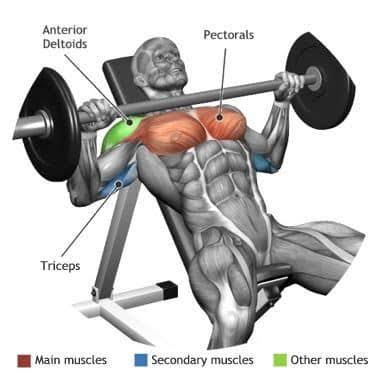
The incline bench press is an effective upper body exercise that primarily targets the chest (uper head) , shoulders, and triceps. Proper biomechanics and safety precautions are essential when performing this exercise
Biomechanics:
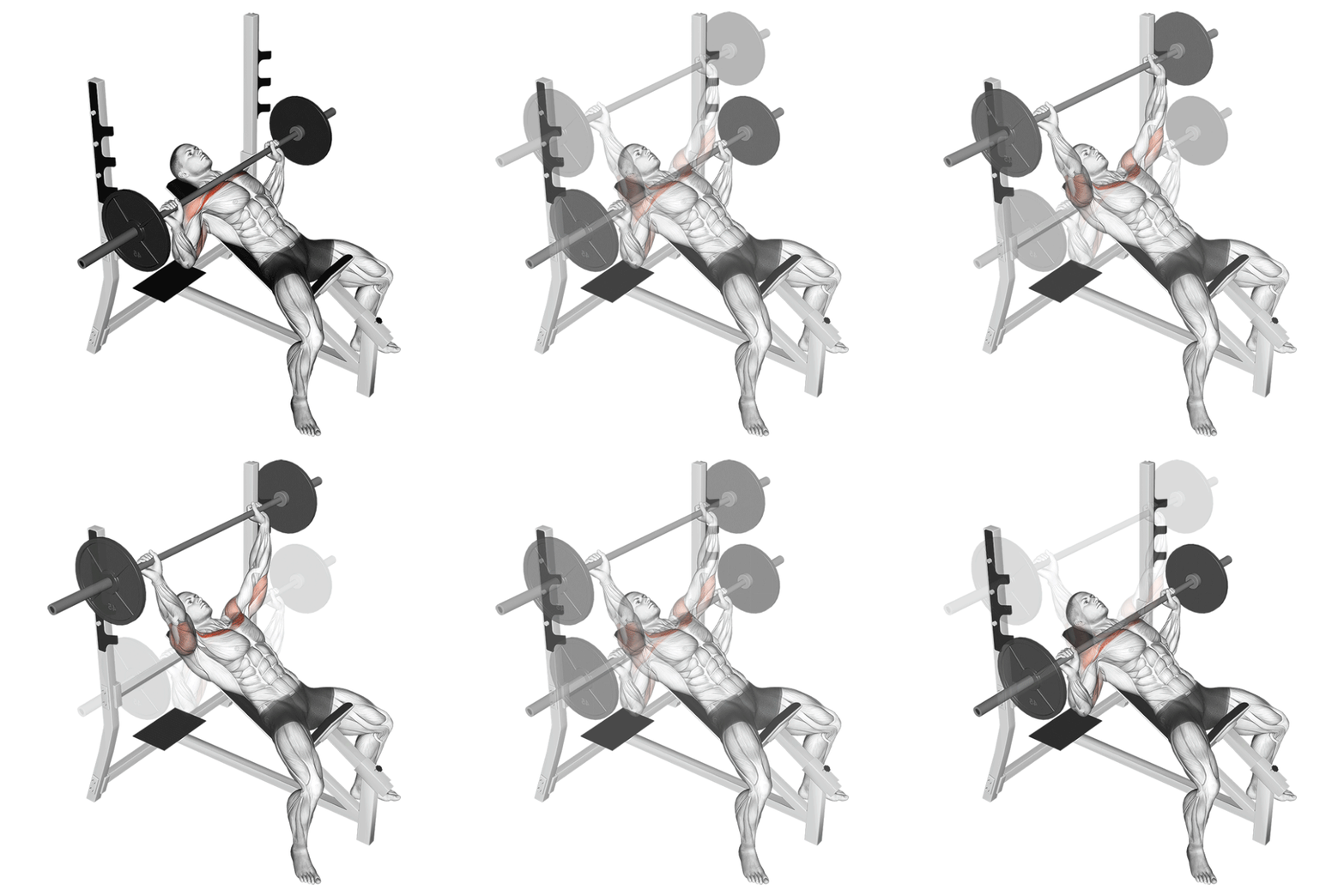
Setup:
- Adjust the incline bench to your desired angle (typically 30-45 degrees).
- Lie flat on the bench with your back, head, and hips in contact with it.
- Grip the barbell slightly wider than shoulder-width apart, with your palms facing forward.
Execution:
- Unrack the bar and lower it to your upper chest while keeping your elbows at around a 90-degree angle to your body.
- Push the bar upward, extending your arms without locking your elbows.
- Focus on squeezing your chest muscles during the upward phase.
- Lower the bar under control to avoid bouncing it off your chest.
Breathing:
- Inhale as you lower the bar.
- Exhale as you push the bar back up.
Safety Tips:
Warm-up: Always start with a warm-up to increase blood flow and prepare your muscles and joints.
Spotter: If possible, have a spotter when lifting heavy weights to assist you if you struggle during the lift.
Proper Form: Maintain a stable back and avoid arching excessively. Keep your feet flat on the floor for stability.
Control: Use controlled movements throughout the exercise to prevent injury. Avoid bouncing the bar off your chest.
Weight Selection: Choose a weight that allows you to complete your desired number of repetitions with proper form. Progress gradually.
Avoid Overextension: Don’t lock your elbows at the top of the lift to avoid strain on the joints.
Balance: Ensure the barbell is balanced and securely placed on the rack before you begin.
Cooldown: After finishing your set, rack the weight safely and perform a cool-down to prevent muscle soreness.
Listen to Your Body: If you experience pain or discomfort, stop the exercise immediately.
Remember that it’s important to consult with a fitness professional or trainer to assess your form and tailor your incline bench press routine to your fitness level and goals. Safety should always be a top priority in any workout routine.
 All About Fitness
Leave a comment